


Magnitude 7.5 'Doublet' Earthquake Hits Venezuela, Leaving Hundreds Confirmed Dead and Thousands Trapped
- Ikmal Fahmi

- Jun 26
- 2 min read
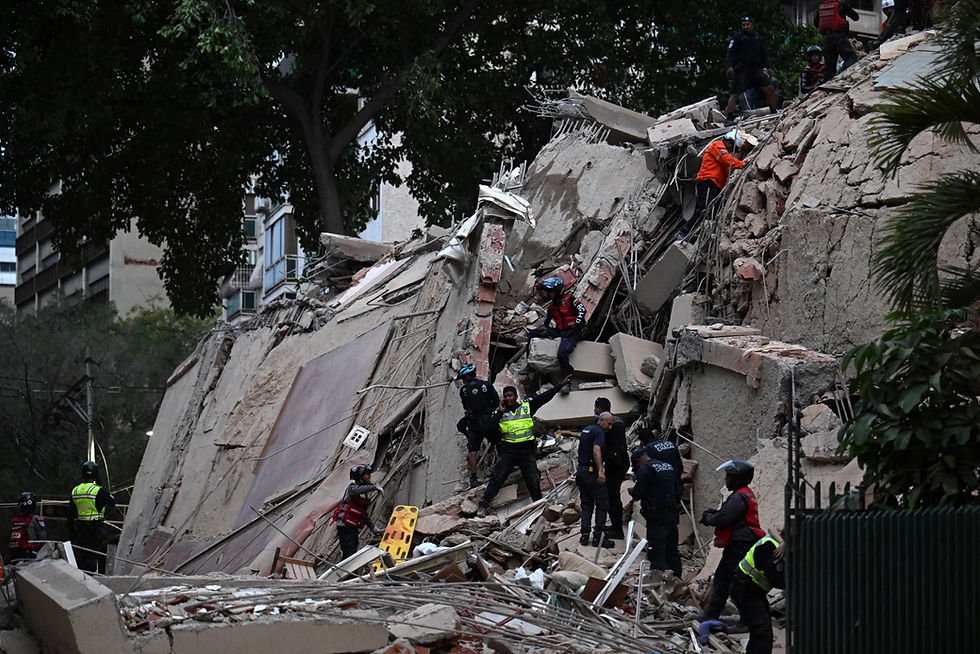
On Wednesday, June 24, 2026, north-central Venezuela was struck by a catastrophic pair of back-to-back earthquakes. Occurring just 39 seconds apart, a magnitude 7.2 foreshock was immediately followed by a massive magnitude 7.5 mainshock.
This rare double-strike marks the country's most powerful recorded earthquake in more than 125 years. The tremors caused violent, widespread shaking that devastated cities across the region, heavily impacting Caracas and nearby coastal areas.
Current Situation and Impact
The shallow nature of the twin quakes amplified their destructive power, particularly against infrastructure already weakened by years of economic strain.
High Casualty Estimates: Official reports confirm at least 188 deaths and over 1,520 injuries, but the final toll is expected to be drastically higher. Because the disaster struck during a public holiday when many people were home, thousands are feared trapped under pancaked structures. Early predictive models from the USGS suggest a high probability that the total death toll could rise into the thousands.
Severe Infrastructure Damage: In Caracas, multiple high-rise buildings completely collapsed, including a 22-story tower in the Altamira neighborhood. Over 100 buildings collapsed in the neighboring state of La Guaira alone.
Airport and Utility Failures: The main international gateway, Simón Bolívar International Airport (Maiquetía) near Caracas, suffered extensive damage and was forced to close completely. Power lines, water systems, and telecommunication networks are down across major swathes of the affected states.
The Humanitarian Response
Acting President Delcy Rodríguez declared a state of emergency, designating La Guaira a disaster zone and mobilizing heavy machinery alongside local civil protection teams.
Because local rescue crews are overwhelmed, international aid offers have quickly come in from the United States, China, India, the European Union, and neighboring Latin American countries. Neighboring Red Cross societies are actively setting up crisis centers to deploy specialized search-and-rescue teams into the affected zones.
On the ground, tech companies like Starlink have stepped in to offer a month of free satellite internet to help residents locate missing loved ones and coordinate local emergency relief.
Generated via Google Gemini


Comments